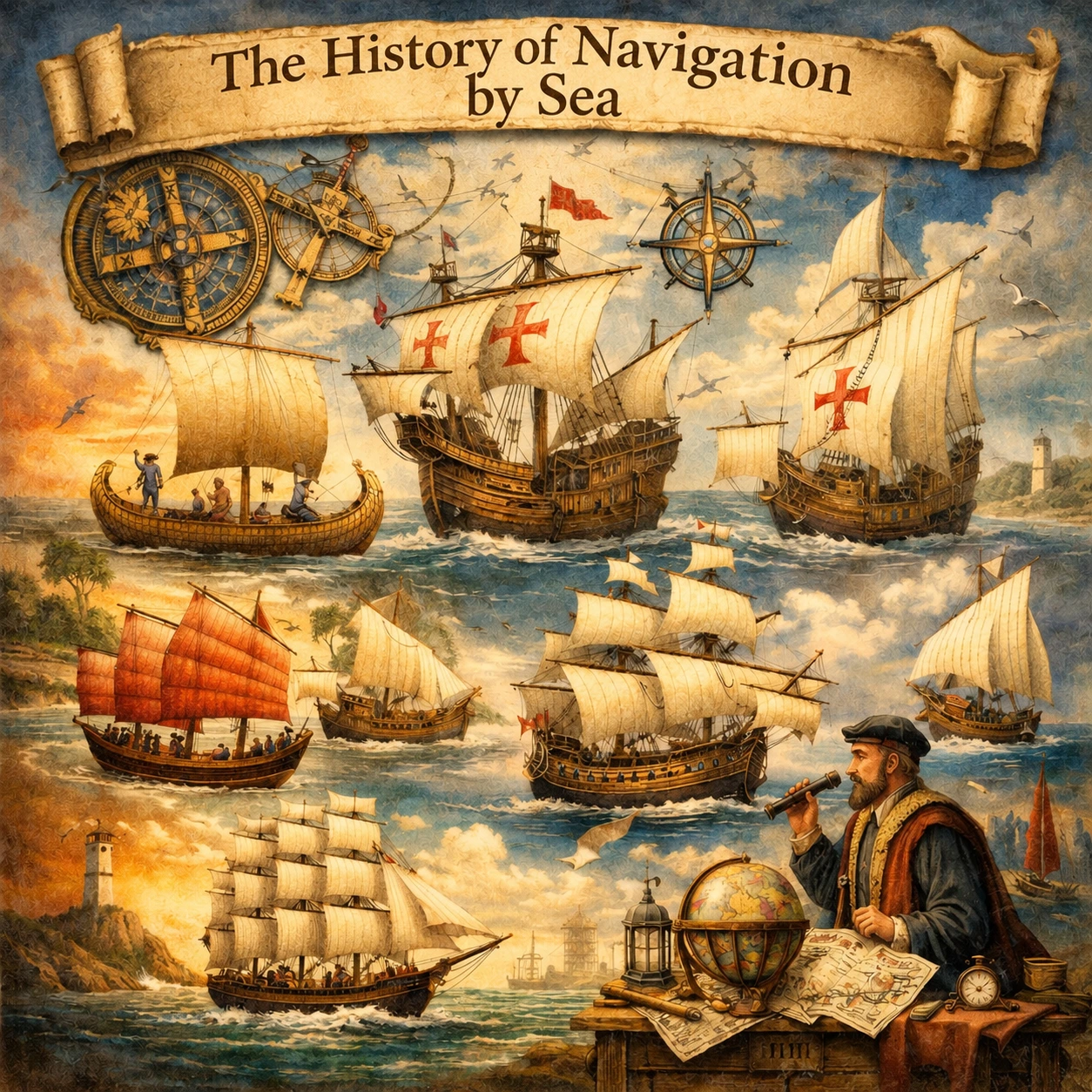
When humans began settling in permanent communities, marking the transition from prehistory to ancient times, they sought locations near major rivers to practice agriculture and raise livestock. However, these activities generated surplus production that needed to be transported to other regions, both overland and along major rivers. Among these early civilizations were Mesopotamia, with the Tigris and Euphrates rivers; India, with the Ganges River; China, with the Yellow and Yangtze rivers; and Egypt, with the Nile, where papyrus boats were widely used. These civilizations maintained a strong tradition of river trade. It was the Phoenicians, around 3000 BC, who fully explored the Mediterranean Sea. Due to their local geography, with natural harbors and rugged, infertile terrain, they initially relied on fishing. Over time, they became the leading maritime traders of the ancient world. By sea, they exported cedarwood, olive oil, wine, and murex (a sea snail from which purple dye, a very rare color at the time, was extracted), while importing iron, tin, gold, silver, wool, and ivory. Many of these goods circulated in both directions between the Far East and the Western world.
Also throughout the Mediterranean, the Phoenicians established colonies to gain better control over trade routes. These included Carthage in North Africa; Corsica and Sardinia, near the Italian Peninsula; and parts of Cyprus, along with several other islands. They played a fundamental role in the development of maritime trade, influencing ancient civilizations through their culture, organizing the alphabet to facilitate commerce, spreading their products and expertise, and creating opportunities for new commercial activities. The Greeks, who adopted this expertise and also benefited from their geographical location, later became renowned Mediterranean traders. They were eventually surpassed by the Romans, who dominated the sea for centuries and even called it Mare Nostrum (Our Sea).
The Phoenicians were a people of merchants descended from Ham, who left the northern region of what is now Lebanon and expanded toward North Africa in search of new trade routes. For a long period, they dominated commerce throughout the Mediterranean. The Phoenicians established ports and cities in distant locations, including the northern coast of Africa and Spain. The authenticity of evidence suggesting a Phoenician presence along the coast of Great Britain remains a subject of debate. There is also evidence suggesting a Phoenician presence in the Americas, including a famous Phoenician inscription on Pedra da Gávea, in Rio de Janeiro, Brazil. Following successive periods of Assyrian, Persian, and Macedonian rule, the Phoenicians' homeland gradually lost its power, while one of their Mediterranean colonies, Carthage, rose to become one of the region's most important ports. Over a period of approximately 120 years, between the 3rd and 2nd centuries BC, the Carthaginian Phoenicians fought the Roman Empire for control of the Mediterranean during the Punic Wars. Following their defeat in 146 BC, little remained of Phoenician culture in the Mediterranean.
Vikings are well known for their warships, called longships or Drakkars. They used these vessels for exploration and raids against other peoples. In addition to allowing them to travel long distances, their dragon ships (Drakkars) provided significant tactical advantages in battle. They could execute highly effective hit-and-run maneuvers, launching swift and unexpected attacks before disappearing and giving their enemies little time to organize a counterattack. Dragon ships could also navigate shallow waters, allowing the Vikings to travel inland along rivers. Beginning in the 10th century, Vikings explored and established bases along the coasts of North America. They may have left traces of their presence there, such as the Kensington Runestone, although many scholars dispute its authenticity. These explorers apparently did not establish permanent colonies in the Americas, limiting their activities primarily to attempts to control the fur trade and other regional goods.


The Greeks used triremes, vessels approximately 36 meters (118 feet) long and crewed by more than 150 rowers. These ships could cover approximately 180 nautical miles at a steady speed of 7.5 knots. They were also equipped with square sails, although the strong winds of the Mediterranean Sea did not always allow them to be used. Some vessels could also be propelled by a single square sail. These oar-powered warships played a crucial role in the rise of the classical Greek city-states, particularly Athens, as major naval powers. During the wars against Persia, Athens alone commanded more than 200 of these ships.
The history of Atlantic navigation gained decisive momentum during the 15th century, when the Turks and Mongols blocked the overland trade routes to the Indies (Asia). The Portuguese sought an alternative route by sailing along the Atlantic coast of Africa, and in 1487, Bartolomeu Dias reached the Cape of Good Hope at the southern tip of Africa.
Five years later, Christopher Columbus crossed the Atlantic and reached Central America, claiming the territory in the name of the Spanish Crown. From the 16th century onward, voyages of exploration multiplied, and the Atlantic Ocean eventually replaced the Mediterranean as the world's main maritime trade route.
This was the era of the great discoveries in the Americas and the beginning of European colonization. Among these discoveries was Brazil, which was reached by Pedro Álvares Cabral in 1500.
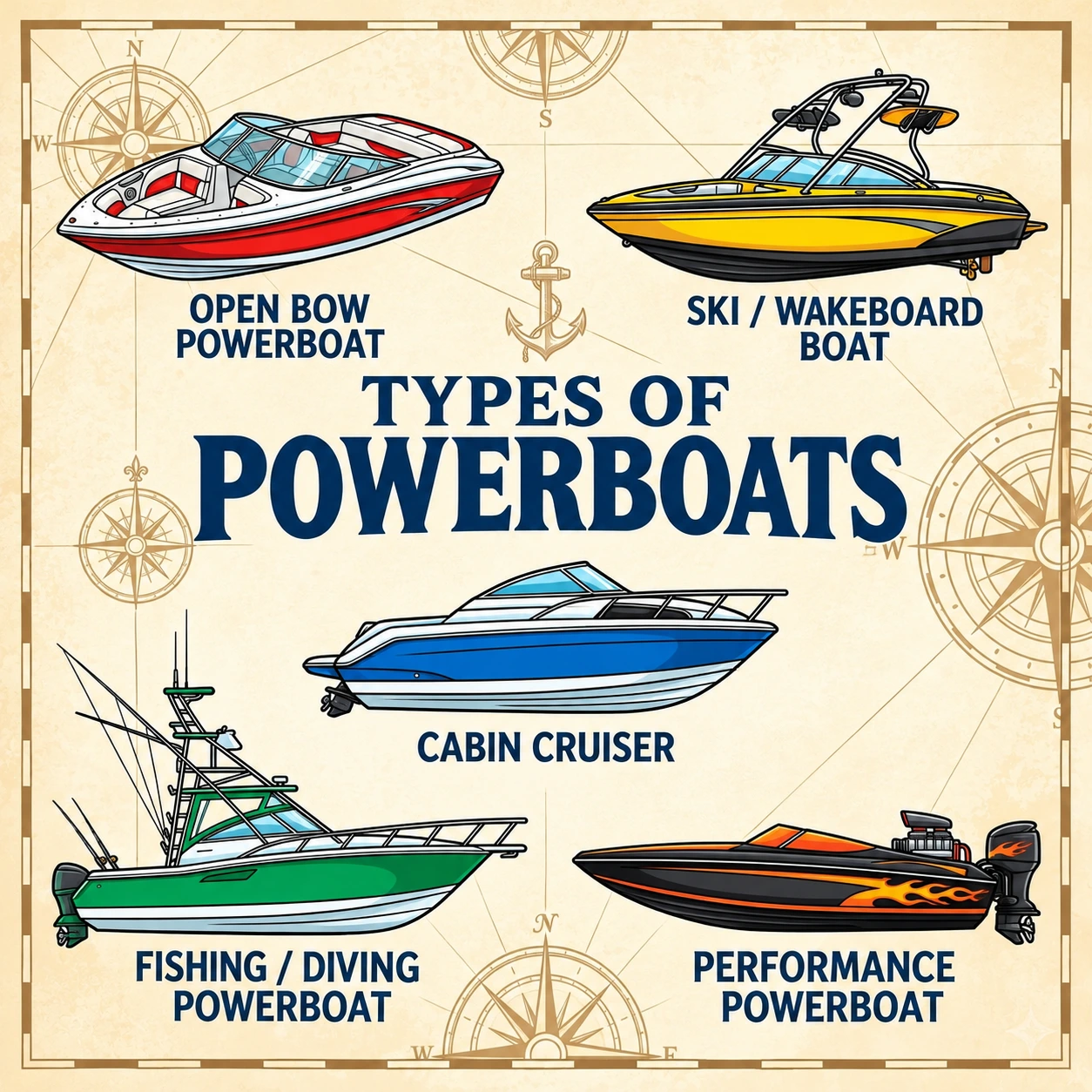
From that point onward, sailing technology continued to evolve until the advent of steam-powered ships and motorboats, including powerboats, as a result of the Industrial Revolution. Sailing vessels gradually lost their role as a primary means of transportation and increasingly became associated with recreational and competitive sports.
Today, sailboats are still used for short-distance transportation, but their primary purpose is recreational sailing and competitive racing. The sport is divided into several different classes and is also part of the Olympic Games.
Source: Wikipedia